Maruti's price hike becomes effective today after announcements were made in December last year. Price hike ranges between Rs 3,000 and Rs 15,000.
Maruti has increased prices for maximum number of models in a price bracket of Rs 3,000. This includes Maruti800, Alto, Esteem and Baleno. While M800’S variants will cost between Rs 2,03,850 and Rs 2,26,754, Alto’s variants will vary from Rs 2,46,430 to Rs 3,02,317. Maruti’s C+ offering Baleno’s variants will now cost between Rs 5,83,173 and Rs 6,65,556 while its C segment offering, Esteem is now priced between Rs 4,44,968 to Rs 5,10,520.
Maruti’s aggressively priced model, Swift will be costlier by Rs 3,500 to Rs 10,000. Swift‘s variants are now priced at Rs 3,99,524 to Rs 5,06,076. Both Zen and Wagon R’s price have been raised by Rs 5,000 and while Zen will cost between Rs 3,49,796 to Rs 4,01,617. Wagon R will now cost between 3,44,582 to 3,96,890.
Wednesday, January 11, 2006


Thursday, January 05, 2006
Porsche Cayenne Turbo S
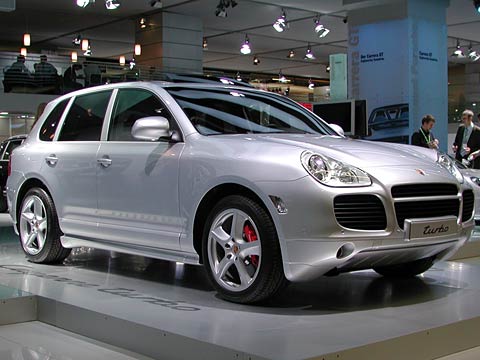
A supercar that seats five, the Cayenne Turbo S packs the wallop of 520 turbocharged horsepower. Combined with chassis dynamics tuned for enthusiasts, and sophisticated all-wheel-drive underpinnings, the Cayenne Turbo S sets the performance benchmark for SUV's.
In addition to boosting power output, Porsche engineers also modified suspension components, revised software controls for the Porsche Active Suspension Management system and beefed up the braking hardware. An optional SportDesign exterior body kit, developed in conjunction with Porsche's styling studio, is also available for the Cayenne Turbo S.
In the Cayenne Turbo S, engine output gets a 16 percent boost over the 450-horsepower Porsche Cayenne Turbo, to an impressive 520-horsepower peak at 5500 rpm. The torque generated by the twin-turbocharged, 4.5-liter V-8 engine grows to 530 lb.-ft. -- a 15-percent increase over the 2006 Cayenne Turbo.
The torque curve for the Turbo S model is better described as a plateau, with maximum torque delivered from 2750 to 3750 rpm, and more than 510 lb-ft maintained from 2500 past 5000 rpm. The horsepower-per-liter figure for the Cayenne Turbo S is an amazing 115.4, compared to 99.7 for the already impressive Cayenne Turbo.
Flowing through intelligent all-wheel-drive and stability management systems, the additional power of the Cayenne Turbo S produces a standing start to 60 miles per hour (96 km/h) time of just 4.8 seconds. And on the test track, the Porsche Cayenne Turbo S is capable of achieving 167 miles per hour (270 km/h).
To provide such performance, Porsche engineers revised the engine control system's throttle map, and installed larger intercoolers that improve volumetric efficiency by lowering the temperature of the air entering the V-8 engine's intake tract. Thanks to the increase in the system's cooling efficiency, engineers increased turbo boost pressure by 4.3 psi (0.3 bar) to a maximum of 27.5 psi (1.9 bar).
Providing further control of the Porsche Cayenne Turbo S, the braking components have been upgraded. Up front, six-piston aluminum monobloc calipers clamp down on 1.5-inch-thick internally vented discs measuring 14.96 inches (380 mm) in diameter. At the rear, four-piston aluminum monobloc calipers bite onto internally vented 14.09-inch (358 mm) discs. The Porsche Cayenne Turbo S rides on standard 20-inch Cayenne SportTechno wheels. Optional are 20-inch Cayenne SportDesign wheels. Whether standard or optional, the 20-inch wheels are wrapped in size 275/40 high-performance tires.
Like Porsche's Boxster(R), Cayman S and 911(R) sports cars, the Cayenne possesses amazingly athletic capabilities, and thanks to technologies such as Porsche Traction Management, these capabilities are not limited to paved roads. While many SUVs have an inherent tendency towards nose-heavy handling characteristics, Porsche engineers direct the majority of the engine's torque (62 percent) from the Cayenne's powerful engine to the rear wheels. This provides the Cayenne with handling dynamics more in line with Porsche's rear- drive sports cars, and sets the Cayenne apart in the SUV marketplace. These traits are so sought after by enthusiast drivers that the Cayenne has become the best selling of all Porsche models.
The 2006 Porsche Cayenne Turbo S goes on sale today in North America. U.S. and Canadian pricing for the new model is $111,600 (USD) and $157,000 (CAD). Complete information on all Porsche models can be found at in the 2006 Model Year Press Kit section.
Volkswagen launches the GX3!

In a world premiere at the Los Angeles Auto Show, Volkswagen presents the GX3 - a completely new type of motorcycle. The GX3 was conceived by the Moonraker team and VW's Design Center in California, exclusively with the U.S. in mind, to bring an exciting idea to a fully functioning concept. With its three wheels and unique design, this Volkswagen opens up a new driving dimension.
A motorcycle with VW features: Light, fast, and environmentally friendly, the GX3 shows that conceptually it is much closer to a motorcycle than to a classic type automobile. This two-seater Volkswagen is one of a kind - bold, young, and affordable. It opens a new driving dimension, turns even the daily commute to work into a small trip to freedom, allows you to cruise in the carpool lane, even if you're driving solo (the GX3 is a motorcycle, after all!) and with its keen handling it opens up completely new horizons for recreational driving.
Amazing dynamics for less than US$17,000: The GX3 will be driven by a VW 1.6 liter engine. The four-cylinder delivers 92 kW / 125 hp. So far, so good. However, the GX3 is a pure driving machine, a motorcycle with two seats positioned side-by-side. And that's why you can find 125 hp and 112.5 ft-lbs (152 Nm) in a mere 1,257 lbs (570 kg) Volkswagen. This results in a power-to- weight ratio of 10 lbs/hp 4.56 kg/PS). In just 5.7 seconds, the GX3 can reach a speed of 62.5 mph (100 km/h) and the possible lateral acceleration reaches 1.25g - values typical of sheer performance cars but delivered from a vehicle under the US$17,000 price range. No comparable sports machine in the world, however, can come even close to the low fuel consumption of the GX3: 46 mpg. Fact is: a production counterpart of the GX3, could be on the market very soon. It all depends on the American driver's feedback.
Tradition of the exceptional: Conceptually and visually the Volkswagen GX3 differs from anything currently on the roads in the U.S. And that's a tradition at Volkswagen. It was with exceptional and unique products - today all of them legends - that Volkswagen propelled itself to the top in the USA during the 50's and 60's. Whether the Beetle, the Thing (Type 181) or the Microbus, all were the cult cars of their time and still are. In 2006, with the GX3, Volkswagen once again presents something totally unexpected and exceptional, a VW in every sense. VW - Being different.
Moonraker: The GX3 was designed in close collaboration between VW's Design Center California (DCC) and an international, cross-functional group of young engineers, designers, manufacturing and marketing experts, also based in California. The team started its work in the US in early 2005. The job: To convert the wishes, dreams and needs of American drivers into mobility. The goal: highest possible customer satisfaction. Background: In addition to the models developed in Germany and sold in the US, in the future Volkswagen will be building more models catering especially to the needs and requirements of U.S. customers. One of the most dramatic and tangible early results of Moonraker: the GX3. Responsible for the design of the new Volkswagen is the Volkswagen Design Studio in Santa Monica. The team there will be working in the future in close cooperation with the product strategy staffs in the U.S. The GX3 offers a look into the exciting and comprehensive spectrum of totally new motor vehicles which are currently being conceptualized by Volkswagen of America for the US market.
Design dynamics: The focus for Volkswagen's design team in California was to create a quintessential and pure driving machine. Inspired by the minimalist design language often expressed in contemporary GP motorcycles and F1 race cars, the GX3 has a true feeling of authenticity. These influences are seen throughout the exterior with an exposed single sided swing arm, aggressive central exhaust, open front wheels and stealthy matte finishes. The progressive dynamic on the GX3 is emphasized with a strong graphic dividing the body as it wraps up to the aggressive forward leaning roll hoops. Anodized gold and black suspension components and LED lighting are further examples of track inspired designs. The GX3 interior is all about business with nothing to distract from the absolute driving experience. The driver's cockpit is equipped with five point racing harnesses; "moto" style instruments and a GTI inspired stainless shifter. Most distinctly, the rear boasts a massive single 18"x12" back wheel dressed with 315 rubber. The front end proudly displays a bold V graphic consistent with Volkswagen's vehicle lineup, most notably the GTI. The GX3 in no way denies that it is a motorcycle, but rather plays it up as a unique design advantage.
Space-Frame: The basic structure of this driving machine is formed by a high-density, warp-resistant, steel construction space frame. The paneling of the interior and exterior parts of the space frame is made of high density fiberglass. A 2.83 tf3 (80 l) trunk is located behind the seats.
Advanced chassis: The 215/45 R17x8J front wheels are controlled by a double lateral steering axle. While the front axle resembles the layout of an automobile, the rear axle shows more parallels to a motorcycle. The right side of the vehicle also makes use of a monoswing arm. The engine's power is delivered via 6-speed transmission and chain drive to the rear wheel, which has a tire size of 315/30 R18x12J - a new super bike dimension. And that suits the GX3. A Volkswagen that breaks away from the conventions and that redefines driving fun and freedom of mobility.
Tuesday, December 06, 2005
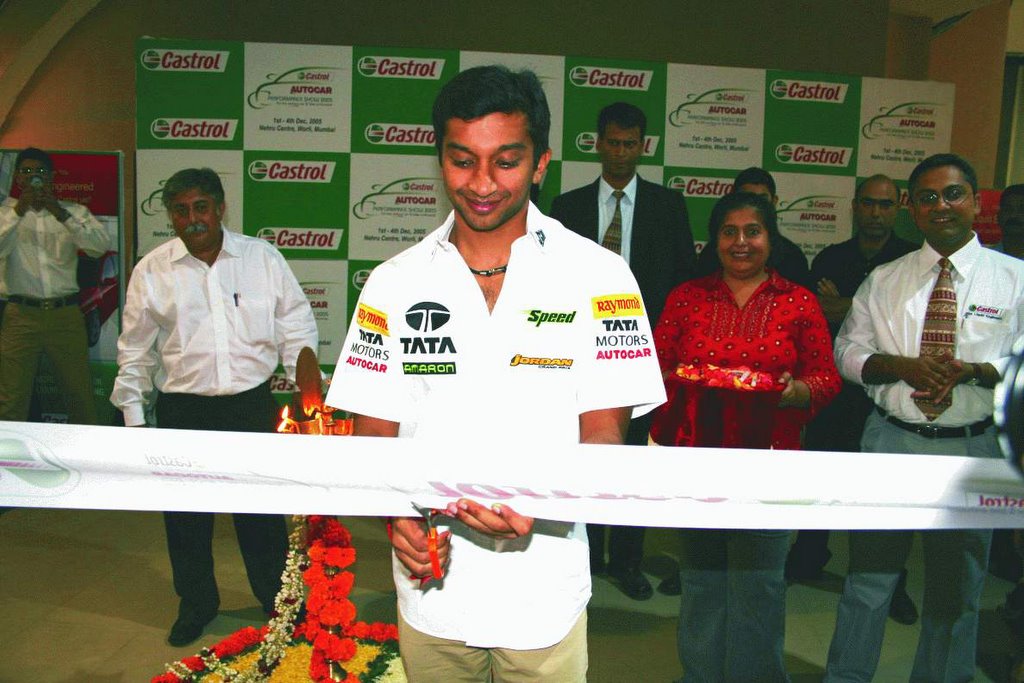
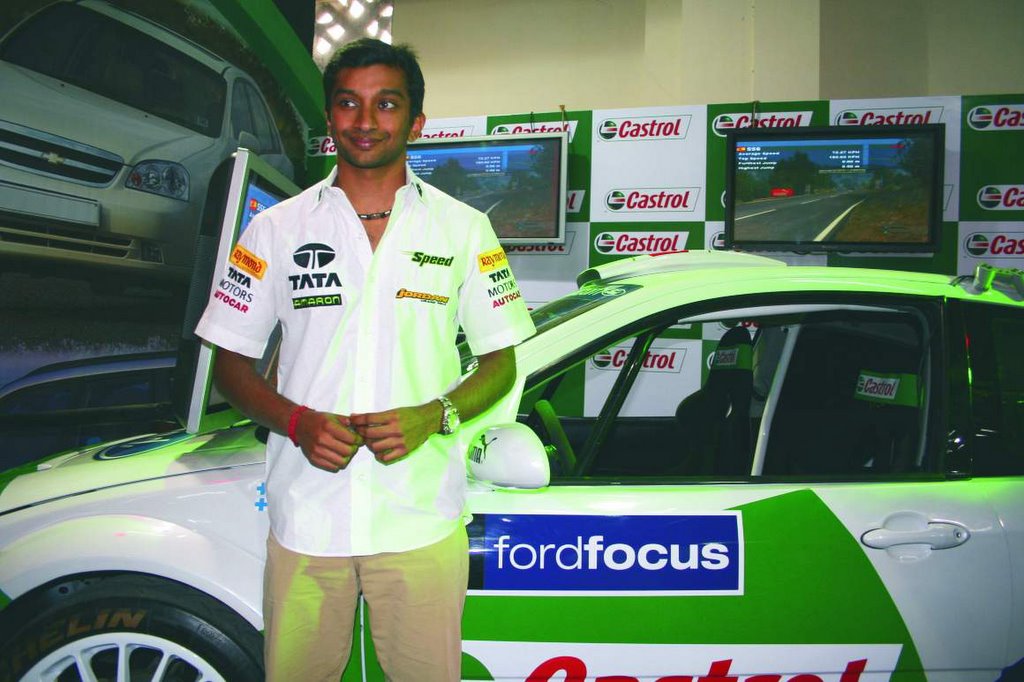
The Castrol Autocar Performance Show 2005, India’s first ever display of high end, super performance cars kicked off on December 1, at the Nehru Centre in Worli, Mumbai. The four-day long show was inaugurated by India’s racing champion Narain Karthikeyan. Spread over two floors of the sprawling Nehru Centre, the Castrol Autocar Performance Show 2005 features over 36 motor manufacturers, designers and leading accessory manufacturers.
Speaking with media persons shortly after inaugurating the show, Narain Karthikeyan, ‘the fastest Indian in the world’ said, This is the first time that a collection of high end, super performance cars has been put together in India. Besides being a treat for enthusiasts, the show offers a fascinating glimpse at some of the most advanced vehicles in the world and is set to become the benchmark for automotive shows in India”.
The star attraction of the show was the Castrol World Rally Championship Simulator where a driver navigates the Castrol World Rally Championship winning car one of the rally courses, whilst sitting in Mumbai! This is the first time that a simulator of this sort has been brought into India.
“Castrol has had a long standing association with motorsport and Formula One and our association with this show is a natural extension of Castrol’s brand promise of superior performance. High performance cars and bikes demand superior lubricants and Castrol is uniquely poised to meet the grueling performance needs of automobiles in motor sport and high end cars. We are delighted that car and bike lovers will get this unique opportunity to get a close, up-front look at some of the most powerful automotive machines in the world”, said Sudhanshu Vats, Vice President-Marketing, Castrol India.
The thousands of people who thronged to the show during the day were treated to a great display of performance cars, including the Porsche Boxster, the Roadster, the Cayenne SUV the Porsche 911 Coupe, the 500bhp BMW M5 Sports Saloon the Rolls Royce Phantom, the 385bhp Range Rover Sport, the 286bhp Mitsubishi Lancer Evo IX, the Polaris All-Terrain-Vehicle, the Chinkara ATV, amongst others. The bikes on display included the Suzuki Hayabusa-the fastest bike in the world, the green devil, the Kawasaki ZX 12R, the Moto GP-bred Yamaha R1, Honda CBR 600RR and the Harley-Davidson V-Rod.
Sharing the motivation behind the launch of the show, Hormazd Sorabjee, Editor, Autocar India, the organizers of the show said “This show is the ultimate destination for those who have a passion for cars and bikes. It is an excellent platform for the automotive industry to showcase exciting products and new concepts to a knowledgeable and influential group of enthusiasts. The show has received excellent support from all sections of the industry and it is heartening that in its inaugural year, it lives up to its promise of being the ultimate show for high performance cars in India”.
Friday, December 02, 2005
First Look - Ford Fiesta!
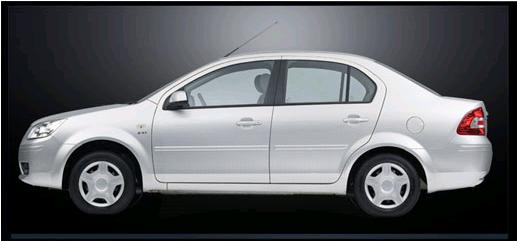
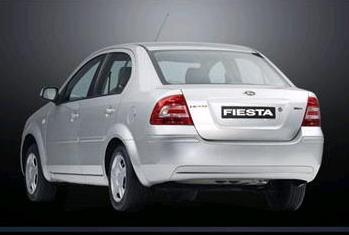
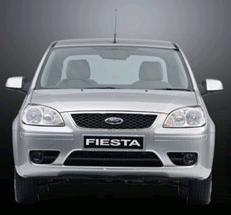
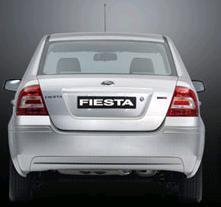
The base model of the Ford Fiesta petrol is priced at 5.59 lakhs. The Fiesta 1.6-liter petrol (ZXI model) would be priced at Rs 6.29 lakhs and the 1.6-liter petrol Fiesta (SXI model) at Rs 6.89 lakhs. The diesel Ford Fiesta with a 1400 cc engine would be available at Rs 6.99 lakhs (ex-showroom).
Subscribe to:
Posts (Atom)